Holy Ground, Common Good: Transforming Idle Church Properties Into Beacons of Community Life
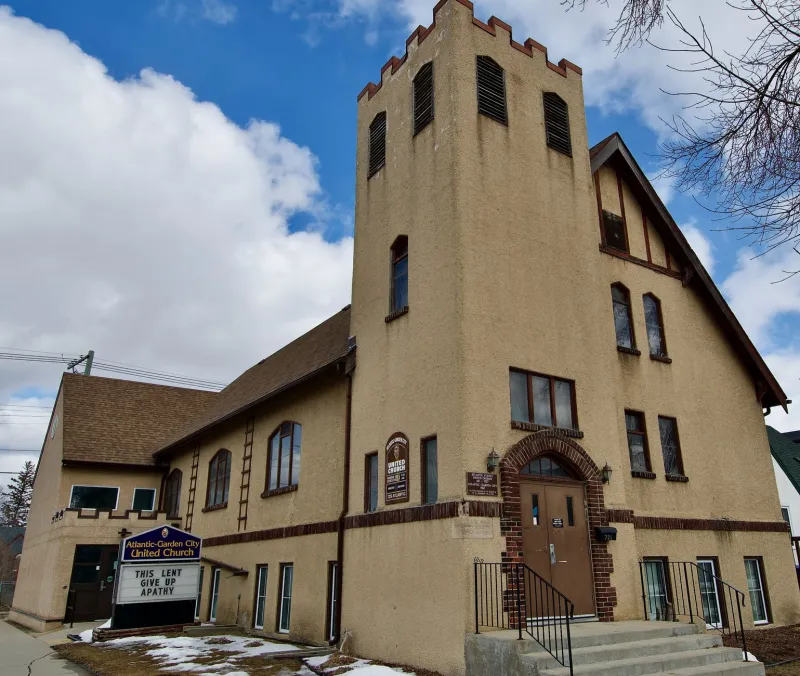
The parable of the talents in Matthew 25 is often read as a call to personal faithfulness—an exhortation to invest the gifts God has placed in our hands rather than bury them in the ground. Yet for many American congregations, one of the most significant gifts in their possession sits largely dormant from Monday through Saturday: the church building itself.
Across the United States, an estimated 350,000 religious congregations own some form of physical property. Many of these facilities—fellowship halls, gymnasiums, commercial kitchens, classrooms, and parking lots—are occupied for only a fraction of the week. Meanwhile, the neighborhoods surrounding these buildings often struggle with food insecurity, inadequate childcare, limited access to mental health services, and the devastating aftermath of natural disasters. The proximity of abundant resource and urgent need, separated by little more than a locked door, represents one of the most consequential stewardship questions facing the American church today.
What Scripture Says About Sacred Space
The Christian tradition has never treated buildings as ends in themselves. The earliest church gathered in homes, in catacombs, and in public squares—wherever the Spirit moved and the community was willing to assemble. When Solomon dedicated the great Temple in Jerusalem, his prayer was not that God would be contained within its walls, but that those walls would serve as a place of encounter, healing, and justice for all who entered (1 Kings 8:41–43). The structure existed to serve the people, not the other way around.
This theological conviction carries profound practical implications. If a church building is understood as a tool of ministry rather than a monument to institutional identity, then the question shifts from Who belongs here? to How can this space serve those whom Christ commands us to love? Faithful stewardship, in this light, is not merely about maintaining a building in good repair. It is about ensuring that the building participates actively in the redemptive work of the congregation.
The Hidden Costs of Underutilization
Before exploring what transformation looks like, it is worth naming what underutilization costs—not only in terms of missed opportunity, but in real financial and relational terms. Buildings require heating, cooling, maintenance, and insurance regardless of how many hours per week they are in active use. A congregation that pays $40,000 annually in facility costs to host two hours of programming on Sunday mornings is, in effect, spending those resources at an extraordinarily low return on mission.
More significantly, an empty building communicates something to the surrounding neighborhood. It signals, however unintentionally, that the congregation exists primarily for its own members. In communities already skeptical of institutional religion, a church that keeps its doors locked while neighbors struggle can become a symbol of indifference rather than an outpost of grace.
Congregations Leading the Way
Fortunately, a growing number of American churches are choosing a different path—and the results are both practically effective and spiritually renewing.
After-School and Youth Development Programs: Several urban congregations have converted unused Sunday school wings into fully operational after-school centers, providing homework help, mentoring, and enrichment activities to dozens of children whose parents work multiple jobs. These programs not only meet a demonstrable need but also build sustained, trust-based relationships between the church and families who might never otherwise walk through its doors on a Sunday morning.
Mental Health and Counseling Services: In partnership with licensed clinical providers, some congregations have opened their facilities to weekly counseling clinics, support groups for grief and addiction recovery, and trauma-informed care sessions. Given the acute shortage of mental health services in many rural and low-income urban areas, a church willing to offer space—and in some cases, subsidized appointments—can become a lifeline for community members who would otherwise go without care.
Workforce Development and Job Training: Churches with commercial kitchens have partnered with culinary training nonprofits, offering credentialed food service education to individuals re-entering the workforce. Others have hosted coding bootcamps, GED preparation courses, and financial literacy workshops in their fellowship halls. The message embedded in each of these programs is unmistakably Gospel-shaped: You have dignity. You have potential. This community believes in you.
Disaster Preparedness and Emergency Relief: Following major hurricanes, winter storms, and wildfires, church buildings have repeatedly emerged as critical staging areas for emergency response—storing supplies, sheltering displaced families, and coordinating volunteers. Congregations that formalize these roles in advance, registering with local emergency management agencies and maintaining basic preparedness infrastructure, are far better positioned to serve when crisis strikes.
Navigating the Practical Challenges
Transforming a church building into a community hub is not without its complexities. Congregations considering this path should give careful attention to several practical dimensions.
Liability and Insurance: Any expansion of building use requires a thorough review of existing property and liability coverage. Most denominational bodies and many independent insurance carriers offer guidance specifically tailored to congregations hosting community programs.
Zoning and Permitting: Depending on the municipality, certain uses—particularly childcare, food service, or medical support—may require specific permits or zoning variances. Engaging local officials early in the planning process is both legally prudent and relationally wise, as it positions the congregation as a cooperative civic partner.
Community Input: Perhaps most importantly, congregations should resist the temptation to design programs in isolation and then invite the neighborhood to participate. Genuine community engagement begins with listening—convening conversations with local residents, school administrators, social service providers, and civic leaders to discern what is actually needed before determining what will be offered.
A Renewed Vision of the Open Door
There is a reason the image of an open door appears repeatedly throughout the New Testament. It is a symbol of welcome, of accessibility, of a community that does not hoard grace but distributes it freely. When a congregation commits to opening its physical doors—not just on Sunday mornings, but throughout the week and across the full range of human need—it enacts something theologically significant.
It says to the neighborhood: This building belongs to you as much as it belongs to us. The God we worship is not confined to our worship hours. The love we have received, we are determined to give away.
At Matthew 25 Ministries, we believe that the measure of a congregation's faithfulness is not the grandeur of its sanctuary, but the breadth of its welcome. The words of Christ in Matthew 25:35—I was a stranger and you welcomed me—do not specify a day of the week. They call for a posture of perpetual openness, a community whose doors reflect the character of the One in whose name they gather.
The building you occupy is not merely a facility. It is, in the fullest sense of the phrase, holy ground—and holy ground, rightly understood, is always common ground.