Mourning With Those Who Mourn: The Church's Sacred Calling in the Shadow of Sudden Loss
There is a particular kind of silence that descends upon a household in the hours after sudden loss. The phone rings constantly, then goes quiet. Casseroles appear on the doorstep. Well-intentioned friends recite familiar phrases—"They're in a better place" or "God needed another angel"—and then, gradually, the world resumes its ordinary rhythm. For the person left behind, however, nothing is ordinary again.
The church is, by its very nature, called to stand in that gap. Jesus did not merely sympathize with mourners from a distance; He wept at the tomb of Lazarus. He drew near. He allowed grief to move Him. In Romans 12:15, the Apostle Paul instructs believers to "mourn with those who mourn"—a directive that is deceptively simple and profoundly demanding. It asks something of us that comfort and convenience rarely permit: genuine, sustained presence in the darkness of another person's sorrow.
Yet many congregations, despite their sincere desire to help, fall short of that calling. The question is not whether the church cares. It is whether the church has equipped itself to care well.
The First Hours and Days: Showing Up Without an Agenda
In the immediate aftermath of unexpected death—whether from accident, sudden illness, or violence—the grieving person is often operating in a state of shock. Decision-making becomes nearly impossible. Emotions arrive in waves that bear little resemblance to the tidy stages described in popular psychology. What the bereaved need most in those first hours is not theological explanation. They need human presence.
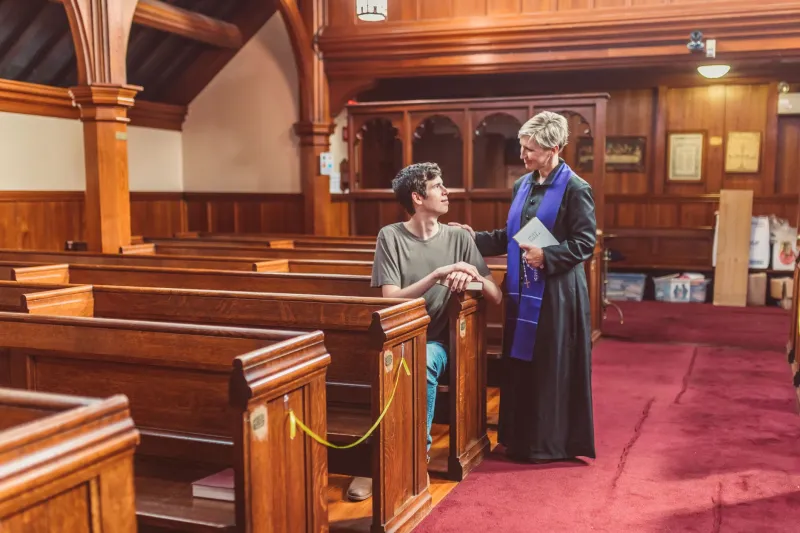
Congregations that serve their members well in these moments have typically learned one foundational lesson: show up, and bring nothing but yourself. A pastor who sits in silence at a kitchen table for an hour, simply bearing witness to another person's anguish, ministers more deeply than one who fills the room with scripture passages and reassurances. This is not to diminish the power of God's Word—it is to recognize that timing matters enormously. The grieving heart must be heard before it can receive.
Practical coordination matters too. Designating a single point of contact within the congregation—a deacon, a care team leader, or a trusted lay minister—to organize immediate needs prevents the bereaved family from fielding dozens of separate inquiries. Meal trains, childcare assistance, and help navigating funeral arrangements are tangible expressions of the body of Christ functioning as it was designed to function.
The Long Months Nobody Talks About
Perhaps the most significant failure of congregational grief support occurs not in the first week, but in the months that follow. Research consistently shows that the hardest period of bereavement often begins around the three-month mark, precisely when the broader community has moved on and expects the grieving person to have done the same.
Churches that take their Matthew 25 calling seriously—serving Christ by serving those in their most vulnerable moments—must build structures that extend well beyond the funeral reception. This means training members to check in meaningfully at the six-week, three-month, and six-month milestones. It means acknowledging grief anniversaries: the first birthday without a spouse, the first Thanksgiving without a child, the first Christmas morning that no longer looks the way it once did.
It also means creating intentional space within the congregation's regular life for those who are grieving. Grief share groups, facilitated by trained lay leaders or licensed counselors, provide a community of shared experience that many bereaved individuals cannot find elsewhere. These gatherings are not therapy sessions, though they carry therapeutic value. They are, at their core, an expression of the communion that defines the church: people carrying one another's burdens, refusing to let suffering be endured alone.
Wrestling With the Hard Questions
Sudden loss does not arrive quietly. It arrives with questions that shake the foundations of faith: Why did God allow this? Where was the protection I prayed for? How can I trust a God who permitted this suffering? These questions are not signs of weak faith. They are signs of honest faith—the kind modeled by the Psalms, by Job, by Jesus Himself in the garden of Gethsemane.
Congregations that respond to these questions with premature certainty—rushing to tidy theological explanations before the wound has even been cleaned—risk deepening the isolation of those who are grieving. A pastor or care team member who can sit with theological tension, who can say "I don't fully understand this either, and that is allowed," offers something far more sustaining than a rehearsed answer.
This requires that church leaders themselves do the interior work of engaging with suffering honestly. Seminaries and ministry training programs across the United States have increasingly recognized the need for formation in grief literacy—the capacity to be present with pain without immediately attempting to resolve it. Congregations of every size and tradition can pursue similar formation through resources, workshops, and intentional pastoral development.
Building a Culture of Compassionate Accompaniment
The most effective grief ministry is not a program. It is a culture—a shared congregational understanding that bearing witness to suffering is a form of worship, that showing up for the brokenhearted is an act of obedience to the One who wept at Lazarus's tomb.
Building that culture begins with leadership. When pastors and elders model vulnerability about their own losses, when they speak honestly from the pulpit about the reality of grief, they grant permission to the entire congregation to do the same. When the church's liturgical life makes room for lament—not only celebration—it signals to those who are suffering that they are not out of place in the sanctuary.
It continues with training. Equipping deacons, small group leaders, and care team volunteers with basic skills in compassionate listening, boundary-setting, and crisis referral transforms a congregation's capacity to serve its most vulnerable members. Organizations such as Stephen Ministries offer structured lay caregiving training that many American churches have found invaluable.
And it is sustained through accountability—regular evaluation of how the congregation is walking alongside those in grief, honest assessment of where the gaps remain, and willingness to grow.
The Ministry of Presence as Gospel
At its heart, the church's calling to accompany those in grief is a proclamation of the Gospel itself. The Incarnation—God choosing to enter human suffering rather than observe it from a safe distance—is the theological foundation of every meal delivered, every silence honored, every anniversary remembered.
When a congregation mourns well with those who mourn, it does not merely offer comfort. It makes visible the character of a God who draws near. It bears witness, in the most concrete and human of ways, to the truth that no one is abandoned in their darkest hour.
That is the ministry to which Matthew 25 calls us. Not the ministry of easy answers, but the ministry of faithful presence. Not the ministry of moving on, but the ministry of staying.
The grieving neighbor in your congregation—the widow in the third pew, the father who lost a child, the young adult whose world collapsed without warning—is waiting to discover whether the church will stay. May we, by God's grace, be a people who do.