Present in the Pew, Invisible in the Parish: The Church's Urgent Call to Single Mothers
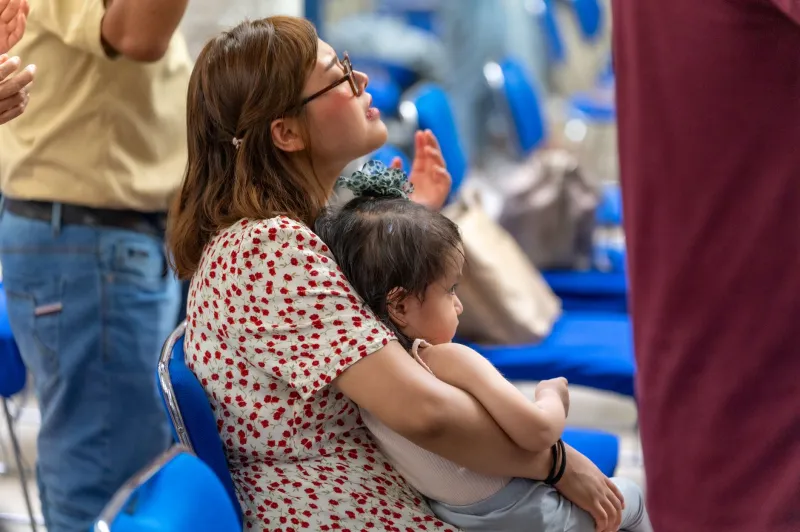
She arrives a few minutes late most Sundays—not from indifference, but because she dressed two children, packed a diaper bag, navigated a car that needs new tires, and did it all without another adult in the house. She finds a seat near the back. She smiles when greeted. She leaves quickly after the benediction because childcare hours are almost up and every extra minute carries a fee she cannot easily afford.
She is a single mother, and she is present in nearly every congregation in America. According to the U.S. Census Bureau, more than 15 million American families are headed by single mothers, and a significant proportion of those women identify as people of faith who attend church regularly. Yet for all their visible presence on Sunday mornings, these women frequently describe feeling profoundly unseen by the communities they faithfully serve and support.
For a ministry rooted in the words of Matthew 25—where Christ identifies himself with the hungry, the stranger, the sick, and those in need—this invisibility is not a minor pastoral oversight. It is a call to repentance and renewal.
The Weight They Carry Alone
To understand what the church is being asked to address, it is necessary first to understand the particular texture of hardship that single motherhood in America so often carries.
The financial dimensions alone are staggering. Single-mother households have a median annual income roughly half that of two-parent households, yet they face the same rent, the same grocery bills, and the same medical costs. Childcare—often the single largest monthly expense after housing—can consume between 25 and 35 percent of a single mother's take-home pay in many American cities. When a child falls ill and daycare is unavailable, it is not a partner who stays home; it is the mother, and that absence from work can trigger a cascade of lost wages, disciplinary action, or worse.
Housing insecurity follows closely. Many single mothers live one unexpected expense—a car repair, a medical bill, a missed shift—away from eviction. Emergency savings, if they exist at all, are thin. The social safety net, while vital, is difficult to navigate and often insufficient.
Beyond finances, there is the emotional and psychological toll of parenting in isolation. Decisions about schooling, discipline, healthcare, and faith formation fall entirely on one person. Grief, loneliness, and exhaustion compound quietly, rarely surfacing in a Sunday morning greeting. Many single mothers report that the hardest part of their circumstances is not any single burden but the relentlessness of carrying all of them without relief.
Where the Church Has Fallen Short
Most congregations are not indifferent to single mothers. Many churches have offered meals during a crisis, collected school supplies in August, or organized occasional babysitting so a mother could attend a midweek Bible study. These gestures are not without value, and the intentions behind them are genuine.
But good intentions, offered episodically, are not the same as sustained solidarity. When a church treats single motherhood as a temporary emergency rather than an ongoing reality, the support it provides tends to evaporate precisely when the novelty of the situation fades—often long before the woman's actual circumstances have improved.
There is also the matter of dignity. Single mothers frequently describe receiving help in ways that feel transactional, conditional, or subtly shaming. Church cultures that implicitly treat the intact nuclear family as the spiritual ideal can leave single mothers feeling that they are tolerated rather than treasured, helped rather than honored. This is a theological failure as much as a pastoral one. Scripture does not offer a hierarchy of family structures; it offers a vision of community in which every member is indispensable and every burden is shared.
What Genuine Ministry Looks Like
Churches that take seriously their calling to stand with single mothers will need to think structurally as well as personally. The following approaches represent not a checklist but a framework for communities willing to commit to the long work of authentic presence.
Consistent, Reliable Childcare Support. Consider establishing a dedicated childcare fund that single mothers in the congregation can access without application paperwork or means-testing. Pair this with a volunteer corps trained to provide regular, not just occasional, childcare—scheduled weekly relief that allows a mother to rest, work, or simply breathe.
Financial Coaching and Emergency Assistance. Partner with a reputable nonprofit financial counseling organization to offer free, confidential financial coaching to any member in need. Maintain a benevolence fund specifically designed to address the small, sudden expenses—a utility shutoff, a car repair, a prescription—that can destabilize a single mother's household overnight.
Housing Advocacy and Practical Connections. Cultivate relationships with local landlords, legal aid organizations, and housing nonprofits so that when a single mother in your congregation faces eviction or unsafe housing, the church can respond with more than prayer. A network of trusted referrals is a form of ministry.
Mentorship and Community. Isolation is among the deepest wounds of single parenthood. Create intentional small groups or mentorship pairings that connect single mothers with other women—married, widowed, or single—who can offer companionship, perspective, and practical wisdom. This is not about fixing; it is about belonging.
Advocacy Beyond the Congregation. The struggles single mothers face are not merely personal; they are structural. Inadequate childcare infrastructure, stagnant wages, and housing markets hostile to low-income renters are policy failures as much as personal hardships. Churches animated by Matthew 25 should be willing to speak publicly in support of policies that address these root causes—affordable childcare, livable wages, and tenant protections among them.
Seeing Her as Scripture Does
The Hebrew Scriptures return again and again to the widow and the fatherless as the measure of a community's faithfulness. In the ancient world, a woman raising children without a husband was among the most economically and socially vulnerable people in any society. The prophets did not treat this vulnerability as a private matter; they treated it as a communal responsibility and a test of covenant fidelity.
America in the twenty-first century is not ancient Israel, but the theological principle endures. A congregation that walks past the single mother in its midst—offering warm words but not warm meals, offering sympathy but not systems—has not yet fully understood what it means to see Christ in the face of the vulnerable.
She is present in your pew. She is faithful in her attendance and her service. She is carrying more than most of her fellow congregants will ever know. The question Matthew 25 asks of every church is not whether she deserves help but whether we have the courage and creativity to offer it in ways that honor her dignity, address her actual needs, and reflect the radical hospitality of a God who sees what the world overlooks.
The ministry to single mothers is not a special program. It is an expression of who the church, at its best, has always been called to be.