Room to Breathe: How Congregations Can Help Rebuild Childcare in Their Communities

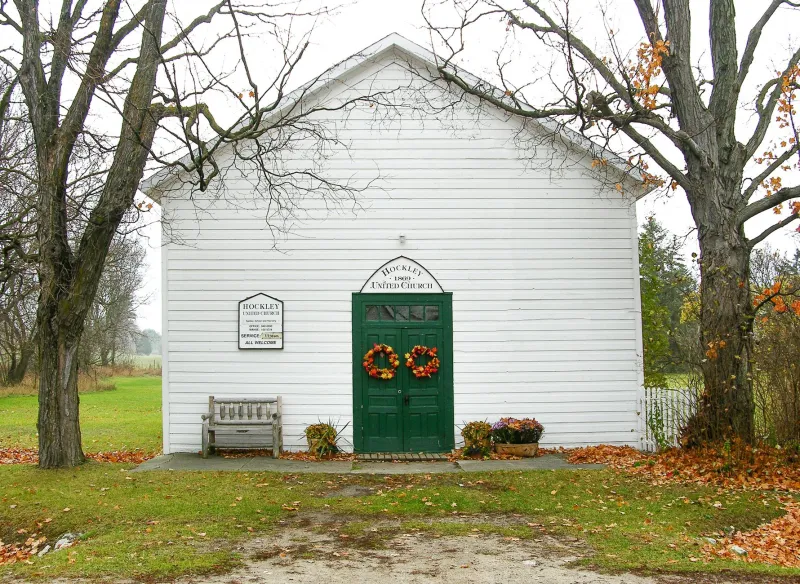
Photo: Philafrenzy, CC BY-SA 4.0, via Wikimedia Commons
Across the United States, the shortage of affordable, licensed child care has become a quiet constraint on family life. Parents turn down shifts, delay training, or leave the workforce because the nearest infant slot is full, too expensive, or simply nonexistent. A childcare desert is not only a zip code without providers; it is a community where employers lose reliable workers, grandparents carry more than they can bear, and young families wonder whether their neighborhood can hold them.
For congregations, this is not a peripheral family issue. It is community infrastructure—the unseen scaffolding that allows households to work, worship, and recover. Scripture repeatedly turns our attention toward children, widows, strangers, and laborers. A church that asks how its neighbors are actually faring will eventually hear the childcare question. The task is to respond with both mercy and prudence.
The Shortage Is Infrastructure, Not Just a Family Problem
Child care behaves like a public utility. When it is available and dependable, other things function: parents keep jobs, small businesses retain staff, children receive stable care, and local economies breathe. When it collapses, the effects spread outward. Mothers cut hours. Fathers take unsafe shifts. Families patch together arrangements that collapse on snow days or during illness.
Churches already own some of the raw ingredients: classrooms, kitchens, fellowship halls, parking, volunteers, and trusted relationships. That does not mean every congregation should launch a childcare center. It does mean churches can ask a more disciplined question: what capacity already exists, what is missing, and what part of the gap can we responsibly help close?
Begin With Honest Limits
Child care is regulated for good reason. Ratios, background checks, safe sleep, food handling, sanitation, medication policies, and reporting requirements exist to protect vulnerable children. A congregation that opens its rooms to children without understanding state licensing and insurance obligations is not showing faith; it is risking harm.
Before any program begins, leaders should consult legal counsel, their insurer, and the state childcare licensing agency. They should distinguish between hosting a licensed provider and operating a program themselves. The first can be a modest act of stewardship. The second is a significant ministry enterprise with staffing, governance, and financial demands.
Four Faithful Pathways
1. Host a licensed micro-program
A church with underused rooms can lease space to an established provider or a qualified operator starting a small, licensed program. The church supplies a clean, safe facility; the provider handles ratios, curriculum, staffing, and licensing. A written use agreement should clarify maintenance, utilities, security, insurance, scheduling, and who is responsible for what.
2. Share space without taking over
Some congregations cannot operate care but can share playgrounds, kitchens, or classrooms during off-hours. A formal agreement protects both parties and prevents informal arrangements from becoming liability traps. Simple improvements—fencing, shade, storage, and a separate entrance—can make shared space far more usable.
3. Strengthen home-based providers
Many neighborhoods rely on home-based providers who care for small numbers of children but lack business support, safety equipment, or backup help. A church can convene providers, offer modest grants for cribs or fencing, host training, or connect them with licensing coaches. The goal is to support their independence, not absorb it.
4. Advocate for local capacity
Child care capacity is shaped by zoning, permitting, subsidy rules, and employer policies. Congregations can attend local hearings, support streamlined licensing for small programs, and ask school districts and employers to coordinate. Advocacy is slower than a ribbon cutting, but it changes the conditions that create deserts in the first place.
Guardrails Against Liability and Mission Drift
Good intentions do not replace good governance. Churches should carry appropriate insurance, require background checks where children are present, maintain clear reporting policies, and avoid any coercion or proselytizing that compromises care. Families should never feel that safe child care is conditioned on religious participation.
Mission drift is subtler. A church can become a landlord, a de facto employer, or a social service agency with no clear boundaries. Leaders should define success in advance: Is the goal affordable slots, provider stability, parent relief, or local advocacy? Review the arrangement annually. If the ministry no longer serves neighbors well, adjust it.
A First Ninety-Day Audit
Ask four questions. What licensed care exists within a reasonable distance? Which families in the congregation or neighborhood are struggling most? What space or relationships does the church actually have? And what would we need—legally, financially, and spiritually—to act without overpromising?
A congregation may discover it can do something modest and real: host a provider, repair a playground, fund a licensing fee, or send trusted members to a zoning meeting. Child care is not a distraction from the church's mission. It is one more way of honoring the neighbor whose burdens are already at the door.