Every Door a Threshold: Reimagining the Church as a Place Where Every Body Belongs
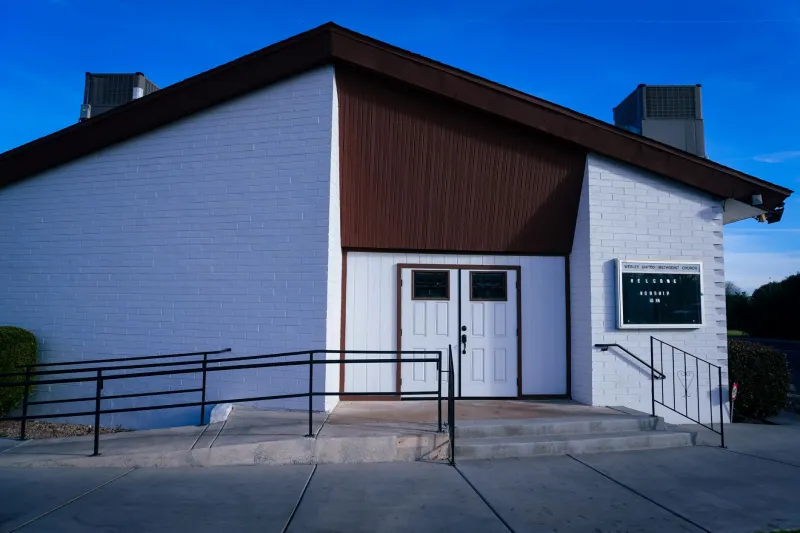
Consider what it takes to enter a church building on a Sunday morning. For many worshipers, the answer is simply: not much. They park, walk through a door, find a seat, and participate without a second thought. For a growing number of their fellow believers, however, the same morning requires an entirely different calculus. Is there a ramp? Does the accessible entrance lead to a side door that feels like a service entrance? Will the restroom accommodate a wheelchair? Will the sound system be clear enough for someone with hearing loss? Will the lighting and crowd noise trigger a sensory crisis for a member on the autism spectrum?
When those questions cannot be answered with confidence, many believers stop asking them altogether. They simply stop coming.
This is not a minor pastoral inconvenience. It is a structural failure with profound theological consequences.
The Scope of the Problem
According to the Centers for Disease Control and Prevention, approximately 61 million adults in the United States live with some form of disability. That figure does not account for the tens of millions more who experience age-related mobility limitations, chronic pain conditions, or sensory sensitivities that fall below clinical thresholds but nonetheless shape how they move through the world. In a nation where roughly a quarter of the population navigates daily life with significant physical or neurological difference, the church that has not seriously examined its accessibility is a church that has, however unintentionally, erected a wall around its welcome.
The Americans with Disabilities Act, signed into law in 1990, established baseline requirements for public accommodations. Many older church buildings, however, were constructed before those standards existed and have never been substantially modified. Others have made partial accommodations—a ramp here, a reserved parking space there—without examining the full arc of a disabled person's experience from arrival to departure. A ramp that leads to a door propped open by a brick, a single accessible restroom located on the far side of the building from the sanctuary, a hearing loop that has not functioned in three years: these are not theoretical failures. They are the lived reality of disabled believers in congregations across the country.
What the Body of Christ Requires
The theological stakes of this conversation are not incidental. The New Testament's central metaphor for the church—the body of Christ—is one of radical interdependence and mutual indispensability. Paul's letter to the Corinthians is unambiguous: "The parts of the body that seem to be weaker are indispensable" (1 Corinthians 12:22). This is not a concession. It is a declaration about where spiritual authority and necessity actually reside.
Jesus himself modeled a ministry defined by deliberate movement toward those whom social structures had rendered marginal. He touched lepers. He healed on the Sabbath in full view of religious authorities. He noticed Zacchaeus in a tree and invited himself to dinner. The pattern is consistent: the one who struggles to access the center of communal life is precisely the one toward whom Christ moves.
When a congregation fails to remove the barriers that prevent disabled members from full participation, it does not merely fail an administrative test. It fails a christological one.
Listening Before Renovating
The first and most important step a congregation can take is not architectural. It is relational. Before any budget is allocated or contractor consulted, church leaders should sit with members who experience accessibility barriers and listen—not to gather data, but to understand. What does Sunday morning feel like for someone who uses a power wheelchair? What does it cost, emotionally and physically, to navigate a building that was not designed with your body in mind? What would it mean to arrive at worship and feel expected, rather than accommodated?
This listening process often surfaces needs that no checklist would have identified. A member with severe anxiety may find the crowded narthex after the service more disabling than any physical barrier. A family with an autistic child may need a quiet room with a live-stream feed more urgently than a ramp. An elderly widow with moderate hearing loss may have stopped participating in small groups because she cannot follow conversations in noisy fellowship halls. These are solvable problems—but only if the congregation first understands that they exist.
Practical Modifications Within Reach
Not every accessibility improvement requires a capital campaign. Many of the most meaningful changes cost relatively little and can be implemented within a single program year.
Signage and wayfinding. Clear, high-contrast signage that identifies accessible entrances, restrooms, and seating areas costs little and communicates a great deal. Braille signage, where feasible, extends that welcome further.
Hearing loop systems. Induction hearing loops, which transmit audio directly to hearing aids and cochlear implants equipped with telecoil receivers, can often be installed in existing sanctuaries for a modest investment. The difference for members with hearing loss is transformative.
Sensory-friendly worship options. A monthly or quarterly service designed with reduced sensory stimulation—softer lighting, lower sound levels, a relaxed behavioral environment—can open worship to families and individuals who have quietly concluded that church is not for them. Some congregations have found that these services attract not only those with sensory sensitivities but also members experiencing grief, anxiety, or spiritual exhaustion.
Reserved and proximate parking. Accessible parking spaces should be located as close as physically possible to the accessible entrance, and their designation should be enforced with the same seriousness the congregation would apply to any other matter of hospitality.
Flexible seating. Fixed pew configurations that leave no space for wheelchairs or mobility devices send an unambiguous message. Modular seating, or designated integrated spaces within fixed pews, allows disabled members to sit with their families rather than in a segregated section.
Training for greeters and ushers. The most sophisticated physical infrastructure can be undermined by a greeter who is uncertain how to welcome a disabled worshiper with dignity. Brief, regular training on disability etiquette—including the basic principle of asking before assisting—costs nothing and matters enormously.
Accessibility as Witness
There is a dimension of this work that extends beyond the congregation's own membership. A church building that is genuinely accessible becomes a different kind of presence in its neighborhood. It signals to the broader community that this is a place where all people are expected—not tolerated, not accommodated as an afterthought, but genuinely expected and desired.
For a ministry rooted in Matthew 25, that signal carries particular weight. The Christ who declares himself present in the hungry, the stranger, and the imprisoned is also present in the neighbor who cannot navigate our steps. When we widen our doors, we are not merely solving a logistics problem. We are practicing, in brick and mortar and sound and light, the radical hospitality of the kingdom of God.