Shoulder to Shoulder, Yet Utterly Alone: The Church's Reckoning With the Loneliness Crisis in Its Own Pews
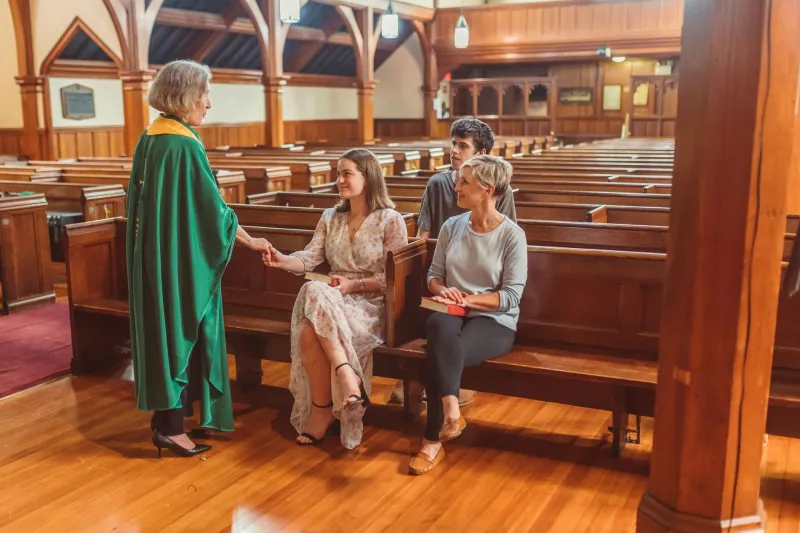
There is a particular cruelty to feeling invisible in a crowded room. For a growing number of Americans, that room is a sanctuary. They file in on Sunday morning, exchange brief pleasantries in the foyer, occupy a seat surrounded by fellow believers, and drive home afterward carrying a loneliness they cannot quite name. The coffee hour is pleasant. The sermon is sound. And yet something essential is missing.
The United States Surgeon General declared loneliness a public health epidemic in 2023, citing research that linked chronic social isolation to outcomes as severe as smoking fifteen cigarettes a day. What that report could not fully capture was the quiet irony embedded in its findings: many of the loneliest Americans are regular churchgoers. The institution that carries the Great Commandment—to love God and to love one's neighbor—has, in many of its expressions, become a place where people perform community rather than inhabit it.
For a ministry rooted in Matthew 25, this reality demands an honest and urgent response. When Christ describes the judgment of nations in that passage, he does not ask whether the righteous attended services faithfully. He asks whether they saw the lonely, the hungry, the stranger—and drew near. The epidemic of congregational loneliness is not merely a pastoral inconvenience. It is a Matthew 25 emergency.
Why Conventional Fellowship Structures Often Fail
Most congregations have, in good faith, constructed fellowship programming around the assumption that proximity creates connection. Potluck dinners, Sunday school classes, and holiday socials are offered with genuine warmth. Yet proximity, research consistently shows, is not the same as intimacy. Sharing a casserole dish does not, by itself, produce the kind of vulnerable, sustaining relationship that Scripture describes when it speaks of believers bearing one another's burdens.
Several structural forces compound the problem. American culture has grown increasingly transactional, and that ethos seeps into congregational life. Attendance is measured; volunteerism is tracked; giving is reported. What resists easy measurement—the slow, patient work of genuine friendship—receives far less institutional attention. Worship services, however beautifully designed, are largely passive experiences. Members sit in rows, facing forward, consuming content together. This is not without value, but it is architecturally ill-suited to the formation of deep bonds.
There is also the matter of performance. Many congregants, consciously or not, arrive at church wearing a curated version of themselves. Struggles with marriage, doubt, finances, or mental health are tucked away, because the unspoken culture of many congregations rewards the appearance of spiritual vitality over honest confession. When everyone seems fine, it becomes impossible to admit that you are not.
The Theology of Radical Belonging
The early church described in Acts 2 was not merely a gathering of people who shared theological convictions. It was a community that held possessions in common, met daily in one another's homes, and ate together with what the text calls "glad and sincere hearts." The Greek word used for this fellowship—koinonia—carries connotations of partnership, participation, and mutual investment that far exceed the English word "fellowship" tends to suggest.
Jesus himself modeled a form of relational ministry that was conspicuously unhurried and deeply personal. He called twelve men not primarily to a program but to himself, to shared meals, shared roads, shared grief, and shared wonder. He wept at a tomb. He asked questions he already knew the answers to, because the asking mattered. He touched the untouchable. The ministry of presence—of genuine, costly attentiveness to another human being—was not incidental to his mission. It was the mission made visible.
Congregations that wish to address loneliness in their pews must begin by recovering this theological vision. Belonging is not a byproduct of good programming. It is a spiritual discipline, one that requires intentionality, vulnerability, and the willingness to be inconvenienced by another person's need.
Practical Pathways Toward Genuine Connection
Reimagining Small Groups as Covenantal Communities
Small groups remain one of the most effective tools available to congregations—but only when they are structured for depth rather than content delivery. A group that gathers weekly to discuss a curriculum without ever creating space for honest personal disclosure will not cure loneliness; it will simply give it a new setting. Effective small groups require intentional covenant-making: agreements around confidentiality, commitments to show up during difficulty, and leadership that models vulnerability from the outset. When a group leader opens a meeting by sharing a genuine struggle rather than a polished testimony, it grants permission for everyone else to do the same.
Mentorship as Ministry
One of the most underutilized resources in any congregation is the wisdom of its older members. Structured mentorship programs—pairing seasoned believers with younger adults navigating career transitions, new parenthood, or spiritual uncertainty—address loneliness on two fronts simultaneously. The younger person receives guidance and genuine relationship; the older person receives renewed purpose and the affirmation that their experience carries worth. This is the Naomi-and-Ruth dynamic made institutional, and it costs a congregation almost nothing except the willingness to make the introduction.
Vulnerable Leadership From the Pulpit
Congregational culture flows downward from its leaders. When pastors and ministry directors speak only from positions of resolved triumph—testifying to victories already secured and doubts already vanquished—they inadvertently communicate that the Christian life is one of continuous competence. This leaves little room for the member sitting in the third row who is barely holding on. Pastoral vulnerability does not require oversharing or the abdication of spiritual authority. It requires the courage to say, from time to time, I have struggled with this too, and I am still in the middle of it. That single act of honesty can unlock more genuine community than a year's worth of well-planned programming.
Intentional Hospitality Beyond the Building
The sanctuary is not the only—or even the primary—space where belonging is formed. Congregations that equip and encourage their members to practice hospitality in their own homes, neighborhoods, and workplaces extend the reach of community far beyond Sunday morning. Simple practices—hosting a neighbor for dinner, checking in on an elderly congregant by phone, walking alongside a grieving friend through a difficult week—are the granular expressions of Matthew 25 love that no program can fully replicate.
A Word to Those Who Are Lonely Now
If you are reading this from inside the loneliness being described—if you have sat in a pew and felt the particular ache of being unseen—please hear this: your experience is not evidence of personal failure, nor is it a reflection of your worth before God. The One who notices the sparrow has not missed you. And the body of Christ, imperfect and still learning, is called to find you.
You may need to name your need aloud, even when that feels impossibly vulnerable. You may need to seek out a pastor, a small group, or a ministry coordinator and say, simply, I am struggling to find my place here. That act of honesty is not weakness. It is the first movement toward the kind of community that heals.
The Congregation as a Counter-Cultural Sign
In an age of algorithmic connection and curated digital personas, a congregation that practices genuine, costly, unhurried belonging is not merely a social service. It is a theological statement—a living argument that human beings are made for more than surface contact, and that the love of God, when it takes root in a community, produces something the world cannot manufacture on its own.
The loneliness epidemic will not be solved by any single program or policy. But it can be interrupted, one congregation at a time, by communities willing to do the slow and sacred work of truly seeing one another. That work is what Matthew 25 has always asked of us. It remains, in every age, the calling we cannot afford to neglect.