When Suffering Wears No Visible Marks: The Church's Call to Embrace Members With Chronic Pain and Hidden Disabilities
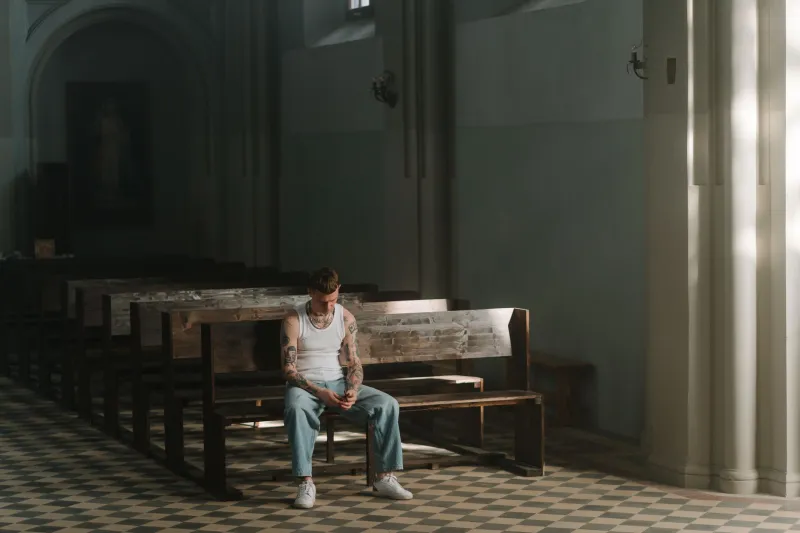
There is a particular kind of loneliness that descends when your suffering is real but undetectable. No cast. No wheelchair. No outward sign that anything at all is wrong. For the millions of Americans living with conditions such as fibromyalgia, lupus, multiple sclerosis, Crohn's disease, chronic migraines, or myalgic encephalomyelitis—commonly known as chronic fatigue syndrome—the invisibility of their illness is not a relief. It is its own burden.
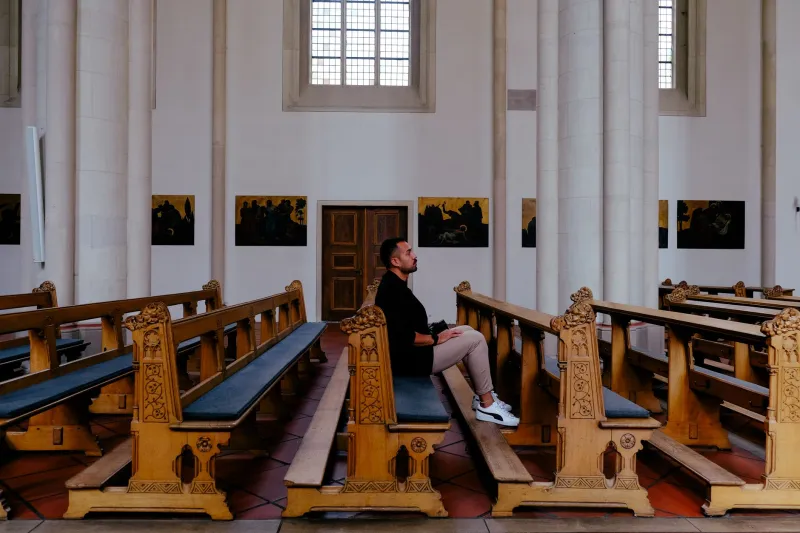
Within the American church, that burden is frequently compounded by silence, misunderstanding, and the quiet sting of being forgotten. When a member with an invisible disability stops attending Sunday worship regularly, the congregation rarely mobilizes in the way it might for someone recovering from surgery or grieving a death. The absence is noted, perhaps, but seldom investigated with urgency. What looks like spiritual drift or simple busyness may, in fact, be a person lying in a darkened room, managing a pain level that makes the drive to church—let alone the act of sitting upright in a pew for ninety minutes—genuinely impossible.
Matthew 25 calls us to something different. "I was sick and you visited me," Jesus declares in that passage, offering no qualifier about the kind of sickness, no stipulation that the illness be visible or terminal or dramatic. The call is simply to see, to go, and to serve.
The Scope of What We Cannot See
According to the Centers for Disease Control and Prevention, approximately 20 percent of American adults live with chronic pain, and a significant portion of those individuals report that pain substantially limits their daily activities. Autoimmune diseases—more than 80 recognized conditions—affect an estimated 23.5 million Americans, with women disproportionately represented. Conditions such as postural orthostatic tachycardia syndrome (POTS), Ehlers-Danlos syndrome, and dysautonomia remain poorly understood even within the medical community, leaving patients navigating not only physical suffering but also skepticism from those around them.
Many of these individuals are faithful believers. They pray. They give. They long for community. But the architecture of congregational life—fixed seating, ambient noise, fluorescent lighting, extended standing during worship, the social expectation of cheerfulness—can render participation not merely difficult but medically inadvisable on their worst days. And for many, the worst days are unpredictable. A person with lupus may attend three Sundays in a row and then disappear for six weeks during a flare. Without education and intentional pastoral attention, that pattern can be misread entirely.
Rethinking What "Participation" Means
The first and perhaps most consequential step a congregation can take is theological: broadening its understanding of what it means to be a member in good standing. If a congregation measures belonging primarily by physical presence in a Sunday morning service, it will, by definition, exclude a significant portion of its own body.
Scripture offers a richer vision. The Apostle Paul's description of the church in 1 Corinthians 12 is explicit: the body has many members, and those members that appear weaker are, in fact, indispensable. The eye cannot say to the hand, "I have no need of you." A congregation that operates as though full participation requires physical attendance in a specific room at a specific hour has, however unintentionally, made that declaration to its most vulnerable members.
Practical reorientation follows from theological clarity. Congregations should consider developing robust digital participation options—not as a pandemic-era holdover, but as a permanent infrastructure of inclusion. Livestreamed services, digital small groups, recorded sermons with closed captions, and accessible online giving platforms are not accommodations for the lazy; they are lifelines for the suffering.
Practical Accommodations That Signal Belonging
Beyond digital access, physical spaces and programming structures can be reconsidered with chronic illness in mind. Some specific steps congregations across the country have begun to implement include:
Designated low-stimulation seating areas. For members with sensory sensitivities, migraines, or neurological conditions, a quieter section of the sanctuary with dimmer lighting and reduced foot traffic can make attendance possible on days when it would otherwise be out of the question.
Flexible seating options. Padded chairs, the option to stand or recline, and accessible restrooms located near the sanctuary rather than across a building can meaningfully reduce the physical cost of attendance.
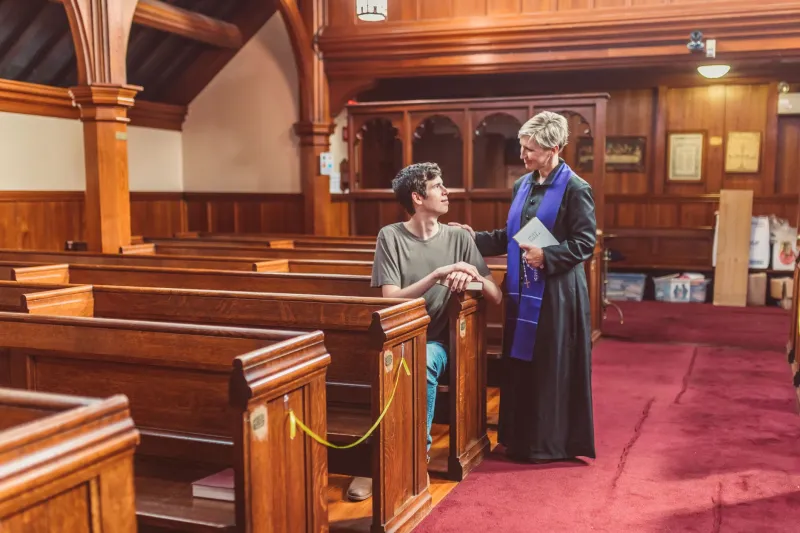
Trained pastoral visitors. Deacons, elders, and lay ministers who receive basic education about invisible illness—including the understanding that a person may look well but be suffering significantly—can transform a congregation's pastoral culture. The goal is not medical expertise but compassionate presence.
Communication without pressure. A simple, periodic outreach to members who have been absent—a card, a phone call, a brief email—that asks genuinely rather than guilts implicitly can mean the world to someone who fears they have been written off.
Prayer that names invisible suffering. When pastoral prayers and intercessory lists consistently name chronic illness, autoimmune disease, and invisible disability alongside cancer and bereavement, the congregation signals that these struggles are seen and held by the community.
The Theological Weight of Hidden Suffering
Christian tradition has always maintained that suffering, though not good in itself, is not outside the redemptive reach of God. The Psalms are saturated with the cries of those whose anguish is real but whose circumstances have not changed. Job's suffering was not resolved by explanation; it was met, ultimately, by presence.
For members living with conditions that may never fully resolve—that may, in fact, worsen over time—congregations must resist the temptation to offer suffering as a puzzle to be solved. The instinct to suggest dietary changes, healing prayer as a transaction, or the implication that greater faith would produce physical relief is not only theologically problematic; it is pastorally devastating to someone who has already spent years seeking answers.
What chronic illness often demands of the church is not answers but accompaniment. The willingness to sit with someone in their uncertainty, to pray without promising outcomes, and to remain present across months and years rather than weeks—this is the ministry of presence that Matthew 25 calls us toward.
Beginning the Conversation in Your Congregation
No congregation will transform its culture overnight, and no single policy change will address the full complexity of invisible illness. But every congregation can begin. A pastor might preach a sermon series that names chronic suffering explicitly and invites members to share their experiences. A church council might commission a small accessibility audit of its facilities and programming. A Sunday school class might study the theology of suffering together, using resources from disability theologians such as Amos Yong or Nancy Eiesland, whose work has enriched the church's understanding of embodied faith.
Most importantly, congregations can listen. The member who has been quietly managing a diagnosis for years, who has scaled back involvement not out of indifference but out of necessity, who wonders whether anyone has noticed or cared—that person may be sitting in your congregation this Sunday, or watching your livestream from a couch, or simply waiting to see whether the church they love will make room for the fullness of who they are.
The call of Matthew 25 is not complicated, even when it is demanding. See the one who is suffering. Go to them. Serve them. In doing so, the church does not merely fulfill an obligation. It becomes, more fully, the body of Christ.